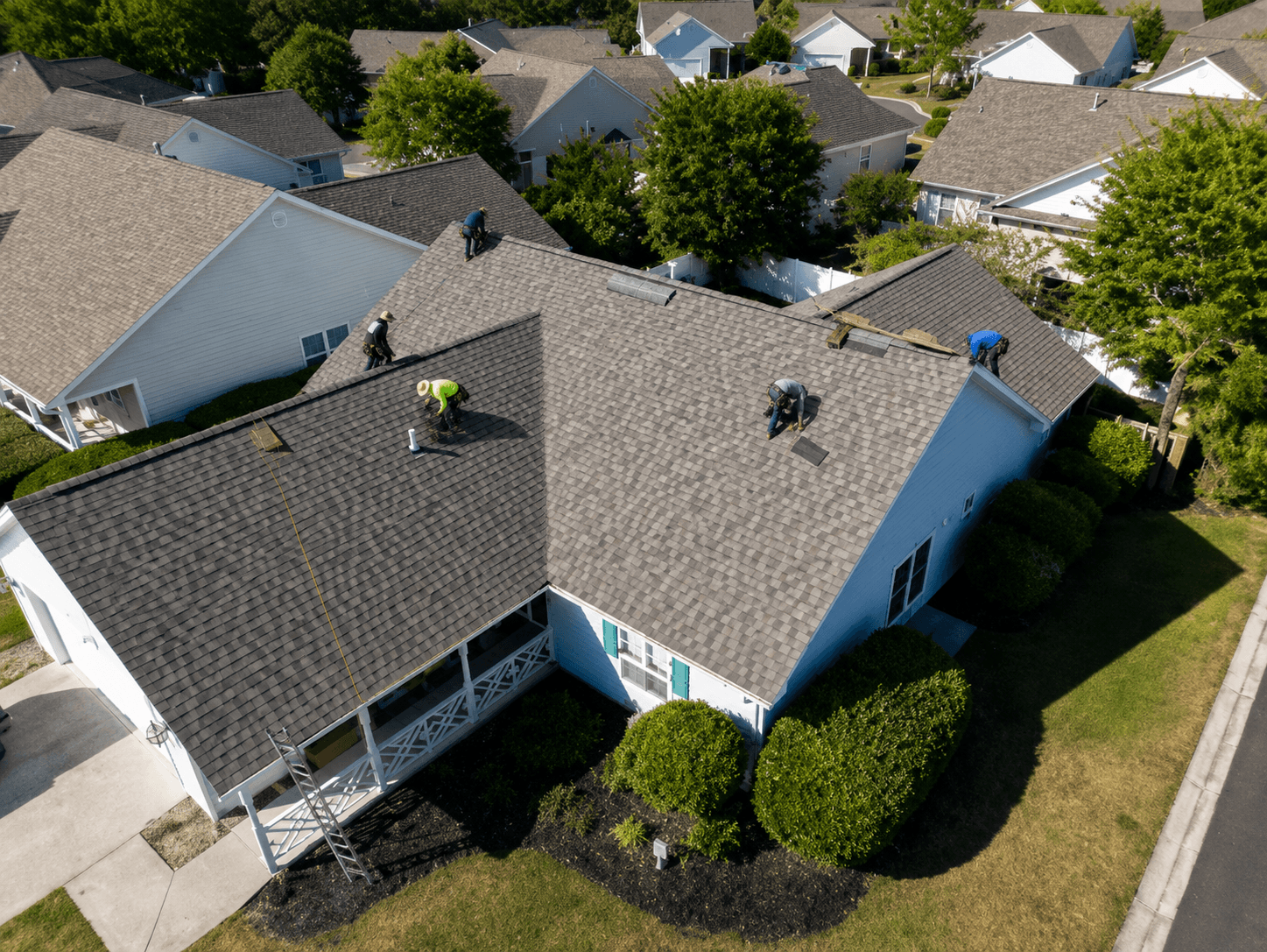
A fall walk around your Jacksonville home can turn a vague concern about the exterior into a useful repair plan. You do not need to diagnose a roof leak or know the name of every trim board. The goal is to notice changes, record where they are, and give a contractor enough information to investigate.
For homeowners and property managers in Onslow County, start with a short list: what needs prompt attention, what needs an inspection, and what can be planned for later. Here is a practical way to build that list without climbing onto a roof or taking materials apart.
Start with a simple record of the property
Choose a dry day with good visibility. Walk only where the ground and access are safe, and take wide photos of each side of the building before photographing individual concerns. Label them by location, such as “back corner beside the kitchen” or “right side of garage.” Keep older photos for comparison.
Add the date, what first caught your attention, and whether the issue has changed. For rental properties, collect occupants’ descriptions before the visit and note any access arrangements. A report that says “bedroom stain appeared after rain last Thursday” gives an inspector more to work with than “possible roof problem.”
Look at the roofline and drainage from the ground
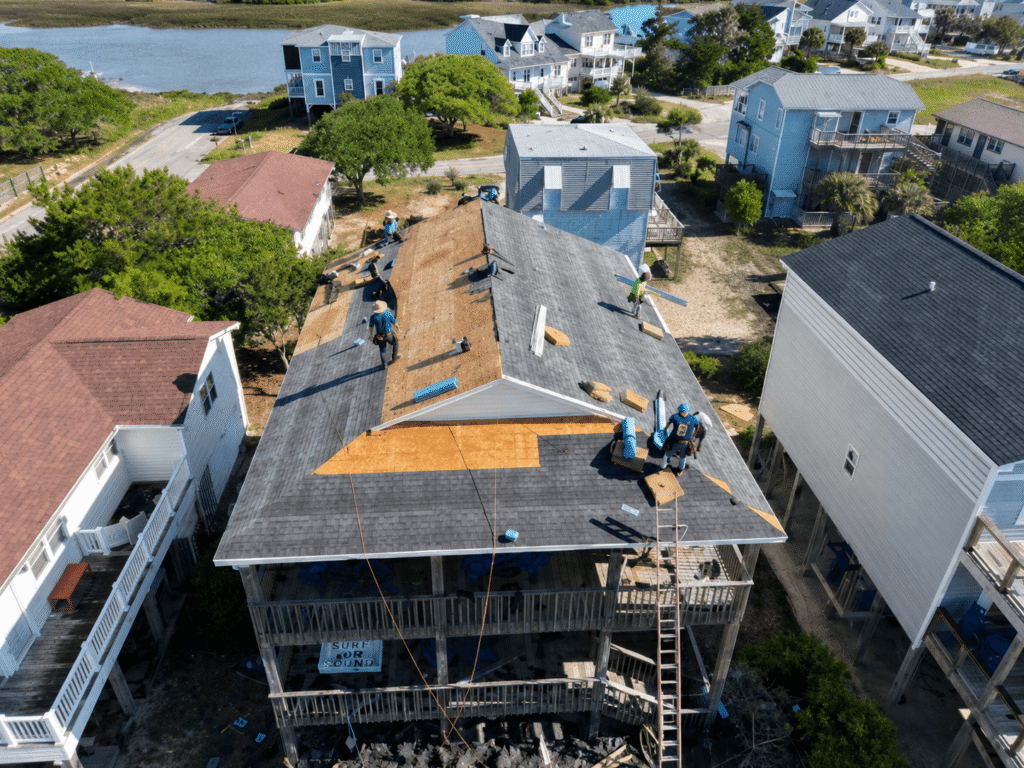
From a safe viewing position, note obvious missing roofing material, debris caught near a roof edge, displaced trim, or a gutter pulling away from the house. Look for downspouts that have separated and places where runoff appears to collect beside the building. Photos taken after conditions are safe can help document staining or washed-out ground.
These observations are starting points, not a diagnosis. A roof can have problems that cannot be seen from the yard, and a stain does not identify its source by itself. Ask a roofing contractor to evaluate the relevant roof covering, flashing, penetrations and nearby materials. Seasoned Exteriors provides roof repair and replacement services in Jacksonville and Onslow County.
Keep inspection and cleaning work that requires roof or ladder access with a qualified professional. The IBHS seasonal home checklist also highlights roof condition, fascia, gutters and drainage as areas to review before winter weather.
Note changes in siding, trim and outdoor areas
Work around the building one section at a time. Photograph siding that has moved out of position, visible cracks, missing trim, or a change around a window or door. Record whether an area has been repaired before. Avoid covering a questionable spot with paint or sealant before its cause has been assessed.
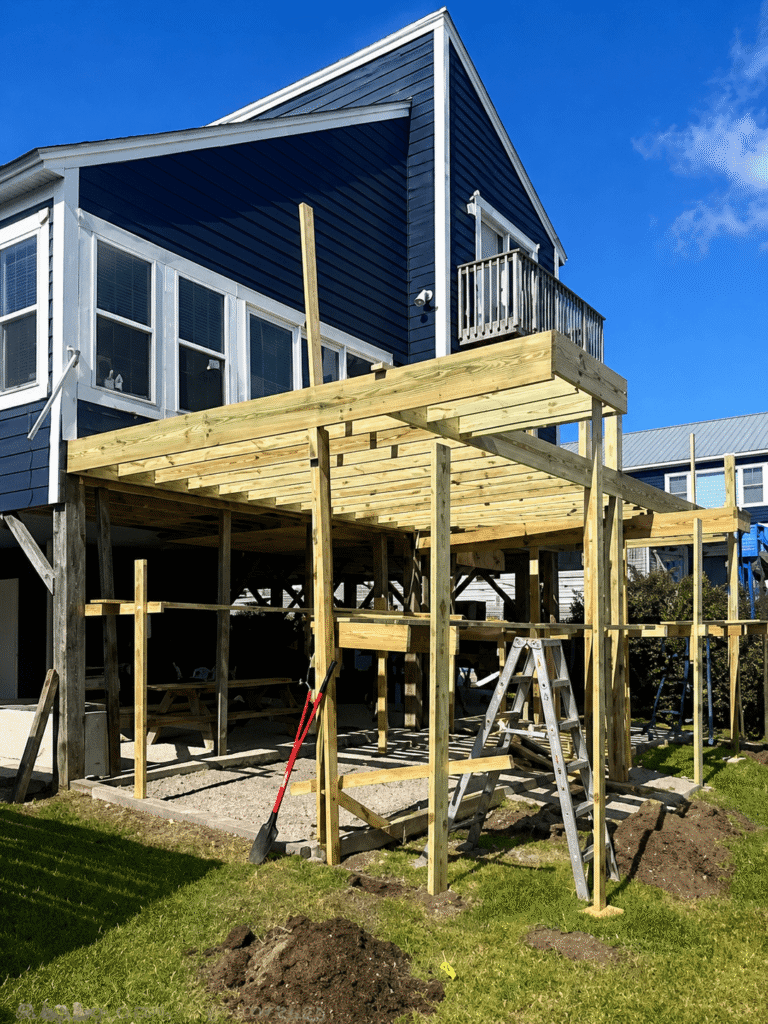
Include accessible deck and porch areas in your notes. Visible deterioration, an uneven step or a rail that occupants report as loose deserves attention. Do not lean on a questionable railing to test it or continue using an area that appears unstable. Describe what you observed and request an assessment of the affected components and their connections.
If a problem crosses several materials, describe the whole area. For example, a stained trim board next to displaced siding and a leaking gutter should be presented together, even if you first noticed only the trim.
Separate urgent concerns from planned improvements
Your list does not need a technical rating system. Use three straightforward groups:
- Prompt attention: active water entry, material at risk of falling, or an outdoor area that appears unsafe. Keep people away from hazards and contact the appropriate professional promptly.
- Inspection needed: a new stain, displaced siding, unexplained recurring dampness, or a visible change whose cause is unclear.
- Planned improvements: appearance updates, a desired deck upgrade, or other work where there is no known active damage.
Fall does not mark the end of tropical weather season. The National Hurricane Center identifies November 30 as the end of the official Atlantic hurricane season. That is a reason to stay organized, not a prediction about your property or a substitute for current local weather guidance.
Make the repair appointment more productive
Send your clearest photos and a short description when requesting an appointment. Share previous repair paperwork if available. During the assessment, ask what the contractor could inspect, what remains uncertain, and whether any additional investigation is needed before the scope is settled.
For a written proposal, ask which areas and materials are included, how related damage would be handled if discovered, and what cleanup and follow-up are part of the work. If several improvements are planned, ask which should happen first. Property managers should also agree on access, occupant communication and a single point of contact.
When comparing proposals, compare the described work as well as the total. A small visible repair and a broader investigation may address different questions. Ask each contractor to explain the recommendation in terms of your observations and their findings. Keep the agreed scope with your property records so the next inspection starts with a clear history.
Plan your next step with Seasoned Exteriors
Seasoned Exteriors handles roofing, siding, decks and general contracting for Jacksonville and Onslow County. Bring your observations, photos and priorities, and we can discuss the appropriate next step for your property. Request a free estimate or call 910-208-6672 to get started.
Image note: the existing Seasoned Exteriors images in this guide are used as editorial illustrations.